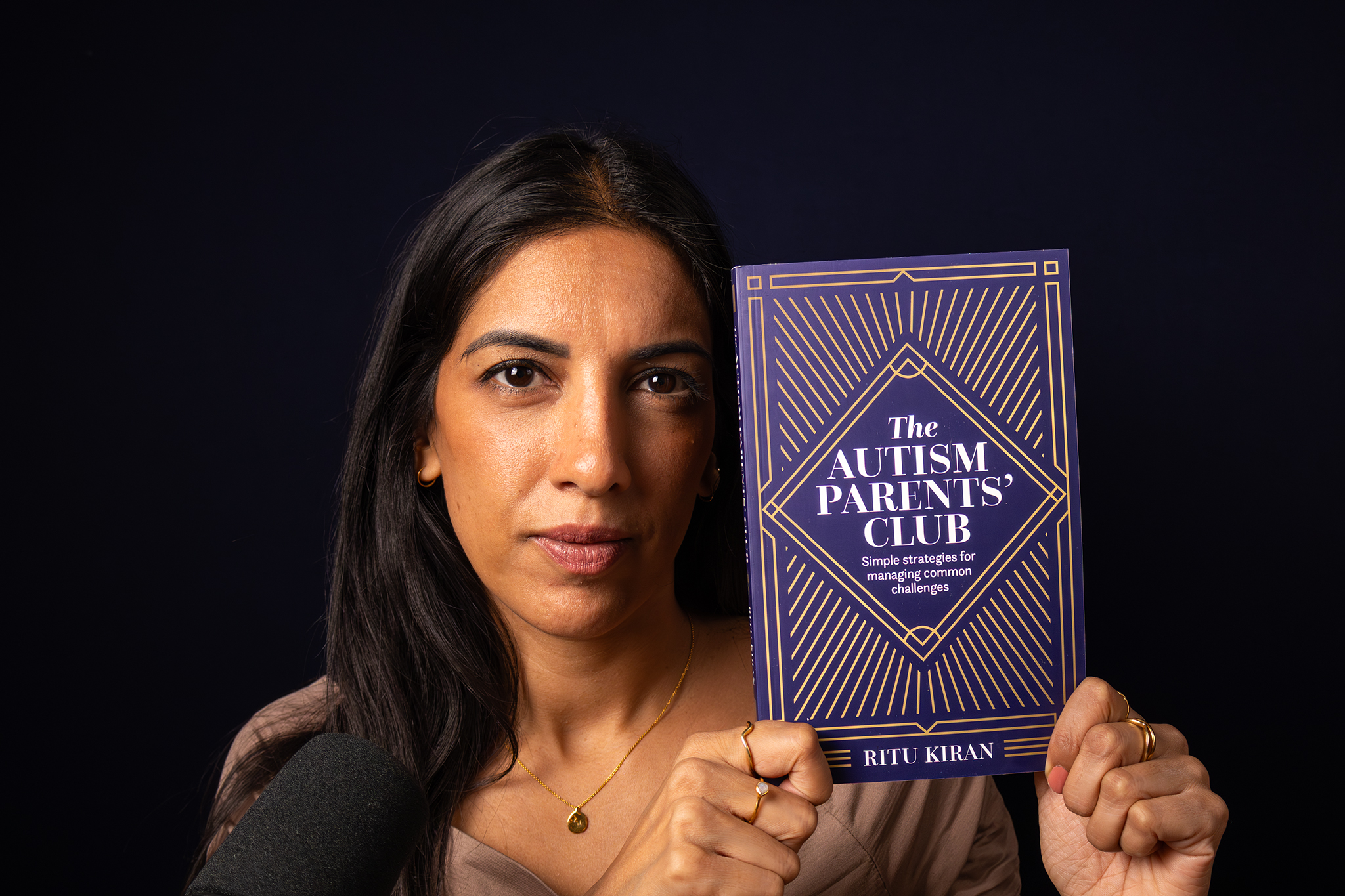
Autism Parents Club

Support for parents with Autistic children

Book review: ‘We’ve Got Issues: Children and Parents in the Age of Medication,’ by Judith Warner

The Autism News | English

By Susan Okie | The Washington Post

I opened Judith Warner’s new book with a certain dread, fearing that I would have to slog through yet another polemic about the overuse of stimulants and other psychiatric drugs in America’s children. Instead, I found a refreshing surprise: a confession by the author that she had indeed gotten a book contract and embarked on her research with that mindset, only to change her views after talking with the parents of mentally ill children. “I was erecting a whole intellectual edifice based on ignorance,” admits Warner, who writes frequently for the New York Times and is also the author of “Perfect Madness: Motherhood in the Age of Anxiety.”

Nowhere did Warner encounter mothers or fathers eager to medicate healthy kids for trivial reasons. Instead, she found parents struggling to find and afford decent treatment for children disabled by their symptoms or their behavior, parents who had turned to psychiatric medicines only out of desperation — and a society that persists in stigmatizing mental illness, blames parents when kids are affected, and has done far too little to ensure that such kids can get access to treatments that have been shown to work.

Instead of an epidemic of over-treatment, Warner describes an epidemic of under-treatment of children with mental illness. “Five percent of kids in America take psychotropic drugs,” she writes — stimulants, antidepressants or other psychiatric medications — while “five to 20 percent have psychiatric issues.” (The lower fraction represents those who are extremely impaired, and the higher one includes those with at least minimal impairment.) Among the disadvantaged, the majority of mentally ill children receive no treatment at all, while many others are prescribed drugs or combinations that are inappropriate for their problems. Warner’s stories attest that even belonging to a rich, well-educated family with health insurance is no guarantee that a child with autism, attention deficit hyperactivity disorder (ADHD) or depression will be properly diagnosed and treated.

But what about the startling numbers: a tripling since the 1990s in the number of U.S. children receiving mental health diagnoses, a recent government estimate that 8 percent of children have ADHD, a 3,500 percent increase between 1991 and 2006 in the number of kids identified as autistic in special education programs? Aren’t they evidence of over-diagnosis? Warner argues, convincingly in my view, that much of the increase in such diagnoses is explained by better recognition and understanding of children’s behavioral and emotional symptoms, as well as the development of effective treatments for disorders like ADHD, depression and obsessive-compulsive disorder, and of special educational strategies and services for children with autism and dyslexia.

Children who a generation ago might have been written off as “weird” or “bad” or “retarded” now have much to gain from being evaluated by a mental health professional, so families are more likely to seek help. Diagnostic baskets have also undeniably gotten bigger: There is now a spectrum of autism disorders, and the prevalence of ADHD nearly doubled after psychiatrists expanded the diagnosis to include kids who, while not hyperactive, are so inattentive that they can’t focus on schoolwork or other activities. In addition, there may well be a true increase in the frequency of disorders such as depression, anxiety and autism in children — but to confirm and measure such an increase, we’d need evidence from serial population-wide studies that asked the same questions and used the same definitions over decades, and such studies don’t exist.

Warner traces the roots of anti-psychiatry sentiment in the United States back to the social rebellion of the 1960s, but she puts the blame for stoking public distrust on the actions of some practitioners — and especially on recent revelations of prominent psychiatrists’ financial ties with the pharmaceutical industry. She condemns the dangerous, unapproved use of certain antipsychotic drugs in children and the Food and Drug Administration’s slowness to act on evidence that some antidepressants increase the risk of suicide in teenagers.

But she is even more concerned about the damage done to children through failure to recognize and treat mental illness. Untreated kids with ADHD are more likely than other children to drop out of school, to have no friends, to engage in antisocial behavior and to use illicit drugs. Children with autism who don’t receive appropriate treatment and interventions are far less likely to live independently as adults than those who do. Failure to recognize and treat anxiety or depression in kids may place them at higher risk for far more serious episodes of depression later.

Interweaving stories of children and families with scientific information and well-researched arguments, Warner makes a compelling case that as a society we should do much more to make mentally ill kids feel better. Among her prescriptions: better insurance coverage (including coverage of non-drug treatments like cognitive behavioral therapy), more financial support for mental health services, an increase in the number of trained child psychiatrists, a research agenda that will speed identification of the most effective psychiatric medications in children, and quality control to reduce the frequency of inappropriate diagnosis and substandard treatment. Perhaps more than anything, she has come to believe, families of kids with “issues” need love and support from the doctor treating their mentally ill child. “The idea is almost laughable, really,” she writes. “But it shouldn’t have to be.”

Source: http://www.washingtonpost.com/wp-dyn/content/article/2010/03/12/AR2010031201806.html

Please share this news with friends, family and also with your contact list on Twitter, Facebook and MySpace.

The Autism News English autism, autistic, book, Judith Warner, review, We’ve Got Issues: Children and Parents in the Age of Medication

Autism-study doctor facing grant probe

The Autism News | English


Poul Thorsen had workedat Drexel forseveral months.

Accusations over funds stir those who reject that there is no vaccine link to the disorder.

By Josh Goldstein | Philadelphia Inquirer

A Danish scientist involved in two major studies that debunked any linkage of vaccines to autism is suspected of misappropriating $2 million in U.S. grants at his university in Denmark.

Poul Thorsen, a medical doctor and Ph.D., was an adjunct professor at the Drexel University School of Public Health for several months before resigning Tuesday.

On Jan. 22, Aarhus University said that it had uncovered a “considerable shortfall” in grant money from the U.S. Centers for Disease Control and Prevention for a research program that Thorsen had directed. The university referred the matter to police, who are conducting an investigation.

Anti-vaccine groups have seized on the allegations to contend that scientific studies disproving the vaccine link to autism are wrong. Those groups have long argued that thimerosal, a preservative in some vaccines, can cause autism, as can the MMR vaccine for measles, mumps, and rubella.

“I think it is quite significant,” said Dan Olmsted of the Age of Autism. “I think someone allegedly capable of ripping off his own university by forging documents from the CDC is capable of pulling off anything.”

The CDC and coauthors of the two studies published in major U.S. medical journals maintain the studies remain valid.

“CDC is aware of the allegations by Aarhus University against Poul Thorsen,” agency spokesman Tom Skinner said in a statement. Federal authorities are investigating.

Skinner noted that Thorsen was one of many coauthors on peer-reviewed studies looking at autism, cerebral palsy, Down syndrome, and alcohol use in pregnancy.

“We have no reason to suspect that there are any issues related to the integrity of the science,” Skinner said.

Efforts to reach Thorsen for comment by phone and e-mail this week were unsuccessful.

In a statement, Drexel University said that Thorsen was an adjunct at its School of Public Health from Dec. 11 until “he resigned his appointment with the school of public health on March 9, 2010.”

Drexel’s statement noted that his role was limited to serving as a member of the thesis committee of one doctoral student.

“To our knowledge, Dr. Thorsen has performed no other work directly connected to Drexel while holding a title at Drexel University,” the statement said.

In 2002, Thorsen was the sixth named author of a study published in the New England Journal of Medicine that analyzed whether where is a connection between the MMR vaccine and autism by examining 537,303 children born in Denmark from 1991 through 1998.

The researchers concluded that their data provided “strong evidence” that there is no link.

“Poul Thorsen had absolutely no influence on the conclusions regarding this paper,” wrote Mads Melbye, head of the division of epidemiology at the Statens Serum Institut in Copenhagen and senior author of the study, in response to e-mailed questions.

“Thorsen was not actively involved in the analysis and interpretation of the results of this paper,” Melbye said.

The second study, published in Pediatrics in 2003, examined 956 Danish children diagnosed with autism from 1971 to 2000. It concluded the incidence of autism increased in Denmark after thimerosal was removed from vaccines.

Kreesten Meldgaard Madsen, the lead author, said Thorsen played a minor role.

“Dr. Thorsen was not in a position to change or compromise the data,” Madsen wrote. “Dr. Thorsen was part of the review cycle, but never very active in giving input. Dr. Thorsen never had access to the raw data nor the analysis of the data.”

Others, such as Paul Offit, director of the Vaccine Education Center at Children’s Hospital of Philadelphia and a vocal opponent of the anti-vaccine groups, said even if the allegation against Thorsen is true, it does not mean his science is bad.

“Let’s assume it is true that he embezzled money,” Offit said. “The notion that it casts the science into question is false. For these big epidemiological studies, it is hard to believe that one person could effectively change the data.”

Offit pointed out that a dozen major studies show no link between MMR and autism and at least a half dozen say the same about thimerosal, which contains mercury.

But the Internet was afire over the allegations.

“Questions about Thorsen’s scientific integrity may finally force CDC to rethink the vaccine protocols since most of the other key pro-vaccine studies cited by CDC rely on the findings of Thorsen’s research group,” Robert F. Kennedy Jr. wrote on the Huffington Post. “The validity of all these studies is now in question.”

In its statement, Aarhus University said the Danish Agency for Science, Technology, and Innovation (DASTI) has gotten grants from the U.S. National Center for Birth Defects and Developmental Disabilities since 2001. Thorsen directed the administration of the grants, the university said.

After discovering that money was missing, DASTI and Aarhus “became aware of two alleged CDC funding documents as well as a letter regarding funding commitments allegedly written by Randolph B. Williams of the CDC’s procurement grants office. . . .”

“Upon investigation by CDC, a suspicion arose that those documents are forgeries.”

The university’s statement goes on to say that in March 2009, Thorsen resigned from its faculty.

Last month, the Copenhagen Post Online reported on the issue without naming Thorsen. The paper pegged the shortfall at 80 million kroner, about $2 million.

In Atlanta, where Thorsen is thought to live, Emory University said he began working there Sept. 1, 2003, as a part-time adjunct professor in its School of Public Health. Emory said that from April 2008 to June 2009, Thorsen “served as a full-time research professor. He is no longer employed at Emory.”

“It is a sad story,” wrote Melbye of the Statens Serum Institut in an e-mail. “We are all here with one big question: What has happened and why?”

Source: http://www.philly.com/philly/news/homepage/87437502.html

Please share this news with friends, family and also with your contact list on Twitter, Facebook and MySpace.

The Autism News English autism, autism study, autistic, Danish scientist, doctor, Drexel, Drexel University School of Public Health, grant probe, no vaccine link, Poul Thorsen

A full spectrum for working with autism in SBC

The Autism News | English


Shawn Olson Brown gives a presentation on autism and the legal aspects that affect schools in offering services to diagnosed students. (Photo by: Nick Lovejoy)

By Melissa Flores | Pinnacle Online

County Office of Ed hosts training workshops for teachers, administrators and parents

The San Benito County Office of Education Special Education Local Plan Area hosted the first of six full-day workshops last week for teachers, administrators and parents who work with children who have an autism spectrum disorder.

The workshops cover a wide area of topics from trends in state and national standards regarding autism education to classroom management to a list of established practices for working with students with an autism spectrum disorder. ASD includes autism, Asperger’s syndrome and pervasive development disorder, not otherwise specified.

According to the Centers for Disease Control and Prevention, 1 in 110 children born in 1998 was diagnosed with an autism spectrum disorder by 2006.

“More people than ever before are being diagnosed with an ASD,” according to a page on the CDC Web site. “It is unclear how much of this increase is due to a broader definition of ASDs and better efforts in diagnosis. However, a true increase in the number of people with an ASD cannot be ruled out. We believe the increase in ASD is possibly due to a combination of these factors.”

One thing that is clear is that the need for teachers, administrators and parents to understand how to work with autistic children is increasing as the number of diagnoses goes up.

According to the California Department of Special Education, in 2008-09, more than 53,000 students ages 3 to 22 were receiving services for autism. That is up from 20,000 in 2002.

Training for teachers

Ann England, the assistant director of the Diagnostic Center in Northern California, presented information about the evolution of state and national standards, research on established practices and some background on working with children who are diagnosed with ASD.

The Diagnostic Center, of Northern California, in Fremont services 35 counties and 500 school districts by offering free training, workshops such as the March 4 meeting and diagnosing children.

England served on the California Legislative Bleu Ribbon Commission on Autism and is a consultant to the California Superintendent’s Autism Advisory Committee.

“Parents went and said [the state] was not doing enough for autism,” she said. “So they created the task force to document what is the problem and what should we know about it. And what public policy should change or be added to deal with the problem. And it can’t cost any money.”

One of the major problems identified by the blue-ribbon commission was that parents of younger children were getting plenty of services, but once the students enrolled in public schools full-time they had to undergo another assessment by the schools so services were interrupted. The recommendation is to have the regional diagnostic centers work more closely with the schools so that an additional assessment is not needed.

Another recommendation was for teachers working with children who have ASD to get a moderate to sever credential to better equip them to deal handle students with a wide variety of behaviors.

“We all know now we have kids with a broad spectrum from mild to moderate in the classroom,” England said. “Teachers say they don’t have the training.”

Legislators approved the credential requirement, and teachers who have a student with ASD in the classroom have three years to complete the 12-14 units to be a qualified teacher. It was announced in October and England said, “That clock is ticking now.”

“We are starting to look at a way to satisfy those requirements,” said Chris Lompa, a program specialist with San Benito County’s SELPA.

England is also working as a trainer at the National Professional Development Center on ASD-Interagency Autism Planning Group at the University of California, Davis MIND Institute, which will be creating model programs for students with ASD in Folsom-Cordova. Teachers and administrators from other sites will be able to visit the model programs to learn what they can do in their own districts.

“To take that stuff and implement it in your classroom with real students is hard,” England said.

Early diagnosis

England said that searching for information on autism can be a bit overwhelming.

“2,220,000 results come up when you google autism treatment,” she said. “I’m going to funnel it down for you.”

One of the issues with autism is that scientists are still not clear on what causes the developmental disorders, which can include communication and social deficits as well as fixated interests and repetitive behaviors.

“Most studies suggest a genetic link,” England said. “And males are four to five times more likely to have it.”

One thing that most experts agree on is that early identification and intervention improves outcomes for children.

“Usually by age 3? parents can tell that something is a little different, but the median age of diagnosis is 4 1/2 to 5 1/2 years old. Medical professionals involved in state planning suggested that pediatricians do a check at 12 months and 18 months.

England said the early diagnosis will be classified as provisional and the children will be seen every six months.

“Kids are unique,” she said. “They may have a cognitive impairment. They may have Fragile X. Parents talk about the early years, and feeling jerked around.”

She said the best diagnosis is one that includes the collaboration of a variety of experts such as a psychologist, a speech pathologist, neurologist and others. The child should be observed in an unstructured environment with peers as well as in a structured environment. There also need to be extensive interviews with parents.

As many as 40 percent of children with autism do not talk. Some have cognitive impairments as well.

“No single intervention or approach has proven to be effective for every individual with ASD,” England said.

Established treatments

The National Autism Center released the National Standards Report in Sept. 2009, in which they reviewed more than 775 published research studies for people with autism under the age of 22. The team looked at the methods for the study, how many individuals were studied and whether or not other studies were able to replicate the finding.

In the end, they came up with 11 established treatments, 22 emerging treatments that need more research and five unestablished treatments.

“The bottom line is it was good research that was replicated and had beneficial results,” said England, of the established treatments.

Some of the practices that have been found to work include using schedules with the students, modeling, pivotal response treatment and self-management.

She also stressed that teachers, administrators and parents can download a copy of the National Standards Project, which includes easy to understand summaries of each intervention that will show what deficits are addressed, with which age group the intervention is most beneficial and what whether it is best used with children with mild to severe autism. England said the report also includes information about the studies cited and she encouraged people to go back to the original studies.

Her key advice to those present was simple:

“Don’t fight the autism.”


Local teachers, administrators and parents listen to a presentation on autism at the Hollister School District Office. The San Benito County Office of Education is sponsoring full-day workshops in March for those working with autistic children. (Photo by: Nick Lovejoy)

Source: http://www.pinnaclenews.com/news/contentview.asp?c=267019

Please share this news with friends, family and also with your contact list on Twitter, Facebook and MySpace.

The Autism News English autism, autistic, full spectrum, Hollister School District Office, Shawn Olson Brown

US court rules again against vaccine-autism claims

The Autism News | English

* Ruling is the fourth against autism claims
* Court says mercury preservative did not cause autism

By Maggie Fox, Health and Science Editor | Reuters

WASHINGTON, March 12 (Reuters) – Vaccines that contain a mercury-based preservative called thimerosal cannot cause autism on their own, a special U.S. court ruled on Friday, dealing one more blow to parents seeking to blame vaccines for their children’s illness.

The special U.S. Court of Federal Claims ruled that vaccines could not have caused the autism of an Oregon boy, William Mead, ending his family’s quest for reimbursement.

“The Meads believe that thimerosal-containing vaccines caused William’s regressive autism. As explained below, the undersigned finds that the Meads have not presented a scientifically sound theory,” Special Master George Hastings, a former tax claims expert at the Department of Justice, wrote in his ruling.

The Meads had filed a civil lawsuit in Oregon state court against a number of pharmaceutical companies alleging that the thimerosal additive in many pediatric vaccines significantly contributed to the development of William’s autism, Hastings wrote.

While the state court determined the autism was vaccine-related, Hastings said overwhelming medical evidence showed otherwise. The theory presented by the Meads and experts who testified on their behalf “was biologically implausible and scientifically unsupported”, Hasting wrote.

In February 2009, the court ruled against three families who claimed vaccines caused their children’s autism, saying they had been “misled by physicians who are guilty, in my view, of gross medical misjudgment”.

The families sought payment under the National Vaccine Injury Compensation Program, a no-fault system that has a $2.5 billion fund built up from a 75-cent-per-dose tax on vaccines.

Instead of judges, three “special masters” heard the three test cases representing thousands of other petitioners.

They asked whether a combination vaccine for measles, mumps and rubella, or MMR, plus a mercury-containing preservative called thimerosal, caused the children’s symptoms.

MYSTERIOUS CONDITION

More than 5,300 cases were filed by parents who believed vaccines may have caused autism in their children. The no-fault payout system is meant to protect vaccine makers from costly lawsuits that drove many out of the vaccine-making business.

Autism is a mysterious condition that affects as many as one in 110 U.S. children. The so-called spectrum ranges from mild Asperger’s Syndrome to severe mental retardation and social disability, and there is no cure or good treatment.

The U.S. Institute of Medicine has reported several times that no link can be found between vaccines and autism.

In a separate matter, the U.S. Supreme Court said earlier this month it would decide whether a federal law protects vaccine manufacturers from lawsuits in state court seeking damages for alleged design defects.

The high court agreed to hear a Pennsylvania case involving a lawsuit by the parents of a child who suffered seizures after her third dose of a diphtheria-tetanus-pertussis vaccine. They sued the vaccine manufacturer, Wyeth, which Pfizer Inc (PFE.N) purchased last year.

(Editing by Philip Barbara)

Source: http://www.reuters.com/article/idUSN1216133220100312

Please share this news with friends, family and also with your contact list on Twitter, Facebook and MySpace.

The Autism News English, English autism, autistic, US court, vaccine, vaccine-autism claims

I’ve waited ten years to hear my autistic son say “I Love You”… Now he tells me every night

The Autism News | English

Happy talk … Donna can now have normal conversations with Neil | Northscot Press Agency

By Stuart Patterson | The Scottish

DEVOTED mum Donna Morrison was devastated when doctors warned that her autistic son would never be able to speak… but she refused to give up hope.

And after battling for ten years, her heart now swells with pride every night when little Neil looks up and tells her he loves her.

Donna, 40, raised thousands to send her boy to America for revolutionary treatment.

She simply couldn’t accept that her little lad would never utter a word. And the proof that he’s defied the odds comes when she puts the ten-year-old to bed.

Donna smiled: “It’s worth a million dollars when he says he loves me every night.

“I couldn’t believe it the first time I heard him say it – I wanted to tell everyone.

“It pulls at my heartstrings because the diagnosis when he was young was so grim.

“It’s absolutely amazing to think how far he’s come.”

Donna, from Fraserburgh in Aberdeenshire, knew something was seriously wrong when Neil was a baby as he rarely cried and slept all the time.

Medics diagnosed a severe form of autism and said that if he didn’t talk by the age of three he never would.

Donna recalled: “He wasn’t like a normal baby at all.

“It was so sad because there was no interaction with him.”

Neil still hadn’t spoken by the time he turned three – but his mum saw his silence as a challenge rather than a certainty.

She began researching the condition and decided to quit her job so she could focus on him.

Donna then changed his diet and found out about groundbreaking therapies that could help Neil escape from his silent world.

She said: “There was no way I could live with what the doctors were saying. It’s devastating for a parent to be told that.

“You want your child to be normal, to talk to you and to play with other kids.

“To be flat out told that is never going to happen is just horrible.

“I couldn’t just write Neil off like that – I couldn’t believe that he was an impossible case.”

After trawling the internet and talking to other parents, as well as autism experts, Donna realised that the medics could have got the prognosis wrong. She explained: “You can’t say what a human being will or won’t do… you don’t know what someone is capable of.”

Donna and Neil’s father Des managed to raise ?12,000 to send the youngster to the Autism Treatment Centre in Massachusetts for a week.

He began a course of pioneering therapy that would change his life.

The treatment helped Neil to start making eye contact and was geared towards helping him say his first word.

Donna travelled with him to America and was trained on how to continue the treatment when they got home. With the help of three volunteers she created a special school in a Portakabin – where Neil was the only pupil.

She said: “The slightest thing distracts Neil. A car going by the window is enough to take his attention away.

“So the Portakabin was the best place to start getting him to focus on communicating with others.

“It wasn’t easy, but once I started there was no way I was going to stop.”

Donna’s classes concentrated on breaking into Neil’s own little world and forcing him to talk. She would put his beloved toys up on shelves – meaning he would have to ask for them to be taken down. On other occasions she would blow bubbles then stop.

Donna said: “If he wanted more bubbles then he would have to ask for more. Very slowly he started making noises which led to words.

“The first time I heard him talk I was just ecstatic – he had proved everyone wrong and it was the best feeling in the world.”

Neil has now defied everyone’s expectations and Donna feels able to send him to school. And she has returned to work as a classroom assistant.

Donna added: “He talks all the time – we can’t get him to stop.

“He tells me all about his day at school, what he would like to watch on the TV. Every day he takes me by surprise.”

But the ultimate reward comes for Donna when she puts Neil to bed, tells him he loves him, and he replies: “I love you too, Mummy.”

Donna said: “Whenever he says it my eyes well up. It’s hard to put into words how happy him saying that makes me feel.

“It makes all the hard work and all the struggles we’ve had over the years worthwhile.”


Groundbreaking … Donna and Neil at US autism treatment centre | Northscot Press Agency

Source: http://www.thesun.co.uk/scotsol/homepage/scotlandfeatures/2885943/Mum-Donna-Morrison-tells-of-joy-after-autistic-son-Neil-learns-to-speak.html

Please share this news with friends, family and also with your contact list on Twitter, Facebook and MySpace.

The Autism News English autism, autistic, i love you