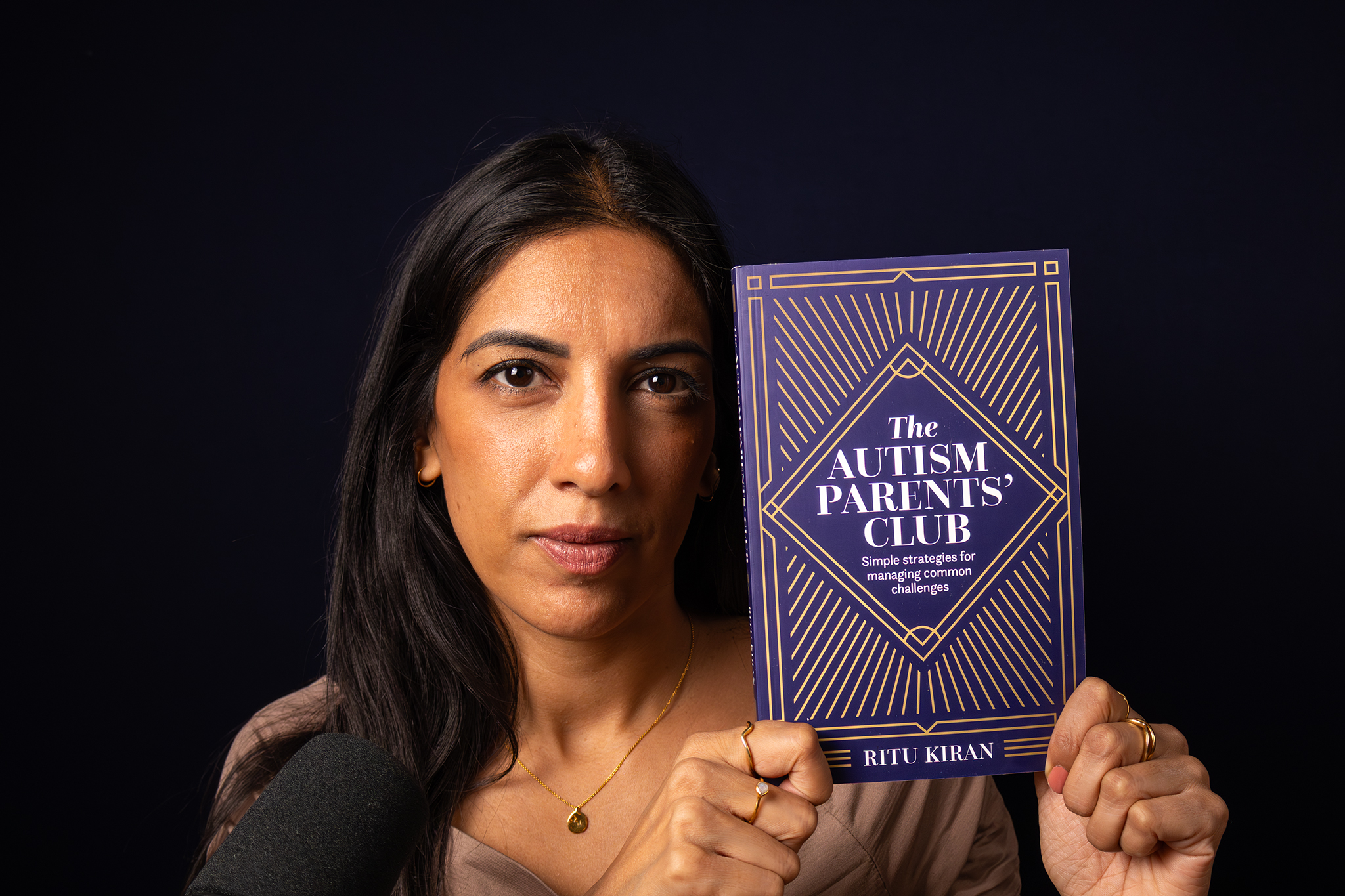
Autism Parents Club

Support for parents with Autistic children

Five Predictors Of Autism In Infants Identified

The Autism News | English


By Med India

A US psychologist says she has identified five predictors of autism in infants.

The five predictors identified were – lack of response to others’ attempts to engage the babies in play, infrequent attempts to initiate joint activities, few types of consonants produced when trying to communicate vocally, problems in responding to vocal requests and a keen interest in repetitive acts, such as staring at a toy while twirling it. In Ms Landa’s investigation, the presence of all five behaviors at 14 months predicted an eventual diagnosis of autism spectrum disorder in 15 of 16 children.

Landa’s study consists of 250 children who were first assessed at either age 6 months or 14 months. Comprehensive measures of social, communication and motor abilities were obtained at each child’s home and repeated at 18, 24, 30 and 36 months of age. The sample included 110 children considered to be at high risk for developing autism because they had older siblings already diagnosed with the same condition.

Preliminary evidence suggests that high-risk 14-month-olds who later develop autism display signs of delayed motor development as early as 6 to 7 months of age, Landa noted. In particular, these youngsters had difficulty keeping their heads stable when slowly raised from a prone position, writes Bruce Bower in Science News.

But psychologists cautioned that much remains unknown about the early identification and treatment of autism. Infant siblings of older children with autism represent a special group that’s especially likely to show early signs of the same disorder, they said.

“I’m not sure the majority of children with autism spectrum disorder have predictive symptoms by 12 or 14 months,” said Sally Rogers of the University of California.

In her own long-term studies, some children without autistic siblings show a gradual slowing of social and language development over several years that leads to autism, while others show no autism symptoms at all until being diagnosed with the disorder at age 4 or 5.

Source: http://www.medindia.net/news/Five-Predictors-Of-Autism-In-Infants-Identified-66427-1.htm

Please share this news with friends, family and also with your contact list on Twitter, Facebook and MySpace.

The Autism News English autism, Autism In Infants, autistic, Identified, Predictors

Startup Targets Rare Genetic Disorder With New Drug

The Autism News | English

BIOTECH: VC-Funded Company Launched With MIT-Spawned Technology

By HEATHER CHAMBERS | San Diego Business Journal

Afraxis, a fledgling San Diego drug developer with technology spun out of the Massachusetts Institute of Technology, has quietly been raising money the last couple of years for testing a new treatment for Fragile X syndrome.

The genetic disorder, named after a gene mutation on the X chromosome, has been identified as a leading cause of autism and mental retardation. Approximately one-third of all children diagnosed with Fragile X syndrome also have some degree of autism, according to The National Fragile X Foundation, a research advocate based in Walnut Creek. The Centers for Disease Control and Prevention also identifies the disorder as the most common cause of inherited mental retardation.

In recent weeks, the four-person biotech has emerged from stealth mode and announced some major hires, namely that of its chief scientific officer and vice president of business development, both former employees with the local biotech Phenomix Corp. And it’s quickly pushing its program into the clinic.

The young company, led by venture capitalist Jay Lichter, began in 2007 by leveraging discoveries made in the MIT lab of Nobel laureate Susumu Tonegawa. His findings — that Fragile X could be reversed in mice by targeting a certain enzyme known as PAK — led Afraxis on a path toward developing a pill that might reduce or even reverse brain abnormalities in humans.

No Approved Drugs to Treat Fragile X

Lichter, who also serves as managing director of Avalon Ventures of La Jolla, said the company started from scratch “with no compounds and no assays and no predetermined clinical path.”

It quickly paired up with Ambit Biosciences Inc., an expert in screening small molecule compounds against an array of enzymes, and identified some drug candidates to support its patent filing.

“That is really what gave birth to the company,” Lichter said.

Today, he said, Avalon has invested $6 million altogether to advance the company to the point of human trials. The young company could have its first drug candidate in human trials as early as next year, according to Chief Scientist David Campbell.

“Our goal is to identify a drug candidate by the middle of this year,” he said.

A drug to treat the disorder, one that affects approximately one in 4,000 males and fewer females, could potentially emerge as a big seller since the FDA has not approved any drugs to treat it, and there’s no known cure.

“It’s a very expensive burden on society,” said Lichter, who further explained that many people living with the disorder can’t hold jobs, have trouble paying attention and often require supervised care.

Source: http://www.sdbj.com/industry_article.asp?aID=145683

Please share this news with friends, family and also with your contact list on Twitter, Facebook and MySpace.

The Autism News English, English Afraxis, autism, autistic, drug, Fragile X, Genetic Disorder, treatment

A magical way to move kids

The Autism News | English


Dr. Dido Green uses magic to help a young patient regain movement in her left arm. Credit: Guy’s and St. Thomas’ Hospital Charity


It’s often hard to motivate youngsters with physical disabilities. But a new approach from a Tel Aviv University researcher bridges the worlds of behavior and science to help kids with paralysis and motor dysfunction improve their physical skills and inner confidence — using a trick up her sleeve called “magic.”

By Tel Aviv University | Physorg.com

Dr. Dido Green of Tel Aviv University’s School of Health Professionals developed an innovative yet remarkably simple series of therapeutic exercises for children and young adults based on sleight-of-hand tricks used by professional magicians. Dr. Green and her magicians used sponge balls, elastics and paper clips to teach the children how to perform the challenging, fun and engaging exercises.

She started her foundational research at the Evelina Children’s Hospital funded by the Guy’s and St. Thomas’ Hospital Charity, Performing Arts Programme in London.

Making physical therapy fun

“Children with motor disorders like hemiplegia — or paralysis on one side of the body — perform routine exercises with their hands and wrists to be able to carry out basic functions such as opening a door, doing up their zipper, or closing buttons,” explains Dr. Green, an occupational therapist with a masters degree in clinical neuroscience and a Ph.D. in psychomotor development of children. “Not only did the kids get a kick out of the magic tricks, they loved doing the exercises every day.”

Dr. Green hopes to create summer “magic camps” for disabled children in both the U.K. and Israel, and will further investigate the benefits of magic for improving motor development of children with disabilities.

Her initial research, now in the process of publication in a peer-reviewed journal, looked at a sample of nine children. “We had a hunch that learning magic tricks could do wonders for kids’ movement problems, but we wanted to see if the kids would actually practice them,” says Dr. Green.

The children practiced ten minutes a day over four to six weeks, resulting in a significant and measurable change in motor skills. “It was a big enough effect to make us want to marry the concept of magic with more specific treatment regimes important for motor learning,” says Dr. Green.

In the next part of the study, Dr. Green will bridge the worlds of behavioral therapy with science. She plans not only to give a large group of U.K. and Israeli kids intensive magic training to help improve their motor skills, but also to look into their brains to see if there is a neurological effect.

Magic meets magnetic resonance imaging

“We’ll be using functional MRIs to see how extensive practice — using the magic tricks as motivators — affects centers in the brain. Having information from the MRI can help us see what works, and for how long a treatment regime will need to be carried out to have sustained changes,” says Dr. Green. One of the things she will measuring is the “plasticity” of the brain to see if activity of different brain areas changes over time as a result of the exercises.

Movement problems can occur in children with autism, spinal cord injuries, diseases affecting the central nervous system, or cerebral palsy. Some of these conditions can lead to hemiplegia. When Dr. Green retired from the stage following a career as a ballerina for the National Ballet of Canada and the Sadlers Wells Royal Ballet in London, she determined to inspire less fortunate children to gain or regain levels of basic functioning.

Source: http://www.physorg.com/news187875146.html

Please share this news with friends, family and also with your contact list on Twitter, Facebook and MySpace.

The Autism News English autism, autistic, Magic, magiciam, Tel Aviv University researcher

Child Learns to Function with Autism

The Autism News | English

By WJBK FOX 2 Detroit, MI

The numbers are soaring: Children lost in their own thoughts, with a disorder that rocks their world. It’s a disorder most marriages won’t survive, either. FOX 2′s Lila Lazarus takes you inside the world of a child with autism, in this video report.

Source: http://www.clipsyndicate.com/video/play/849029/child_learns_to_function_with_autism?cpt=8&wpid=1277

Please share this news with friends, family and also with your contact list on Twitter, Facebook and MySpace.

The Autism News English, English autism, autistic, Child Learns, child with autism, Function with Autism

Better genetic test for autism? Chromosomal microarray analysis picks up more abnormalities than current tests

ScienceDaily (Mar. 15, 2010) ? A large study from Children’s Hospital Boston and the Boston-based Autism Consortium finds that a genetic test that samples the entire genome, known as chromosomal microarray analysis, has about three times the detection rate for genetic changes related to autism spectrum disorders (ASDs) than standard tests.

Publishing in the April issue of Pediatrics (and online March 15), the authors urge that CMA become part of the first-line genetic work-up for ASDs.

Expectant parents who have family members with ASDs, as well as families who already have an affected child, often request genetic testing. However, there is still only limited knowledge about actual causative genes. The currently recommended tests (karyotyping to look for chromosomal abnormalities and testing for Fragile X, the single largest known genetic cause of ASDs) often come up negative. Chromosomal microarray analysis (CMA) is a genome-wide assay that examines the chromosomes for tiny, sub-microscopic deletions or duplications of DNA sequences, known as copy-number variants.

CMA offers about 100-fold greater resolution than standard karyotyping. However, since it is new, it is often considered a second-tier test. Depending on where a person lives, or what insurance they have, CMA may not be covered by health insurance. “Based on our findings, CMA should be considered as part of the initial clinical diagnostic evaluation of patients with ASDs,” says Bai-Lin Wu, PhD, Director of Children’s DNA Diagnostic Lab in the Department of Laboratory Medicine, which has offered CMA to families since 2006.

The research team, led by co-senior authors Wu (heading the Children’s team), and David Miller, MD, PhD, of Children’s Division of Genetics and Department of Laboratory Medicine (heading the Autism Consortium team), assessed the diagnostic value of CMA in the largest cohort to date — 933 patients with a clinical diagnosis of ASD (by DSM-IV-TR criteria) who received clinical genetic testing in 2006, 2007 and 2008.

Half were Children’s patients who had their samples submitted to the hospital’s DNA Diagnostic Laboratory, and the others were recruited through the Autism Consortium, a research and clinical collaboration of five Boston-area medical centers. Nearly half of the patients were diagnosed with autistic disorder, nearly half with PDD-NOS (pervasive developmental disorder — not otherwise specified) and about 3 percent with Asperger disorder. Ages ranged from 13 months to 22 years.

Testing included the two currently used tests (G-banded karyotype and fragile X), as well as CMA. When the researchers compared the tests’ diagnostic yield, they found:

  • Karyotyping yielded abnormal results in 2.23 percent of patients
  • Fragile X testing was abnormal in 0.46 percent
  • CMA results were judged to be abnormal in 7.3 percent of patients when the entire length of the chromosomes (the whole genome) was sampled.

Extrapolating from these results, the researchers estimate that without CMA, genetic diagnosis will be missed in at least 5 percent of ASD cases. CMA performed best in certain subgroups, such as girls with autistic disorder, and past studies indicate that it also has a higher yield in patients with intellectual disability (who constituted only 12 percent of this sample).

“CMA clearly detects more abnormalities than other genetic tests that have been the standard of care for many years,” says Miller. “We’re hoping this evidence will convince insurance companies to cover this testing universally.”

In all, roughly 15 percent of people with autism have a known genetic cause. Establishing a clear genetic diagnosis helps families obtain early intervention and services for autism, and helps parents predict the possibility of having another child with autism.

In addition, by pinpointing bits of chromosomes that are deleted or duplicated, CMA can help researchers zero in on specific causative genes within that stretch of DNA. They can also begin to classify patients according to the type of deletion or duplication they have, and try to find specific treatment approaches for each sub-type of autism.

“Just in the last two years, a number of studies have revealed the clinical importance of ever smaller chromosome deletions and duplications found with advanced microarray technology,” says Wu. “These new, highly-efficient tests can help in the evaluation or confirmation of autism spectrum disorders and other developmental disorders, leading to early diagnosis and intervention and a significantly improved developmental outcome.”

Two known chromosome locations — on chromosome 16 (16p11.2) and chromosome 15 (15q13.2q13.3) accounted for 17 percent of abnormal CMA findings. Both chromosome abnormalities were initially linked with ASDs by Children’s Hospital Boston and collaborators in The New England Journal of Medicine and the Journal of Medical Genetics, respectively, in 2008. Children’s now offers specific tests targeting both of these “hot spots.”

However, the researchers note that most copy-number changes were unique or identified in only a small number of patients, so their implications need further study. Many of them are presumed to be related to ASDs because they involve important genes, cover a large region of the chromosome, or because the child is the first person in that family to have the change.

“Some deletions and duplications are rare and specific to one individual or one family,” says Miller. “Learning about them is going to be an evolving process. There won’t be one single test that finds all genetic changes related to autism, until we completely understand the entire genome.”

The paper’s co-first authors were Autism Consortium members Yiping Shen, PhD, of Children’s Department of Laboratory Medicine and the Center for Human Genetic Research at Massachusetts General Hospital, and Kira Dies, ScM, LGC, of the Family Research Network of the Autism Consortium and Children’s Multi-Disciplinary Tuberous Sclerosis Program. A number of specialists from Children’s Departments of Neurology, Developmental Medicine and Clinical Genetics and physicians from other medical centers in greater Boston were also authors on the study. The research was supported by the Nancy Lurie Marks Family Foundation, the Simons Foundation, Autism Speaks and the National Institutes of Health.

Families interested in scheduling an appointment at Children’s may call the Developmental Medicine Center (617-355-7025) or the Department of Neurology (617-355-2711).


Story Source:

Adapted from materials provided by Children’s Hospital Boston.


Journal Reference:

  1. Shen et al. Clinical genetic testing for patients with autism spectrum disorders. Pediatrics, 2010; 125 (4): e1-e17 DOI: 10.1542/peds.2009-1684

Note: If no author is given, the source is cited instead.